A loud, low-cost horn for your bike
Overview
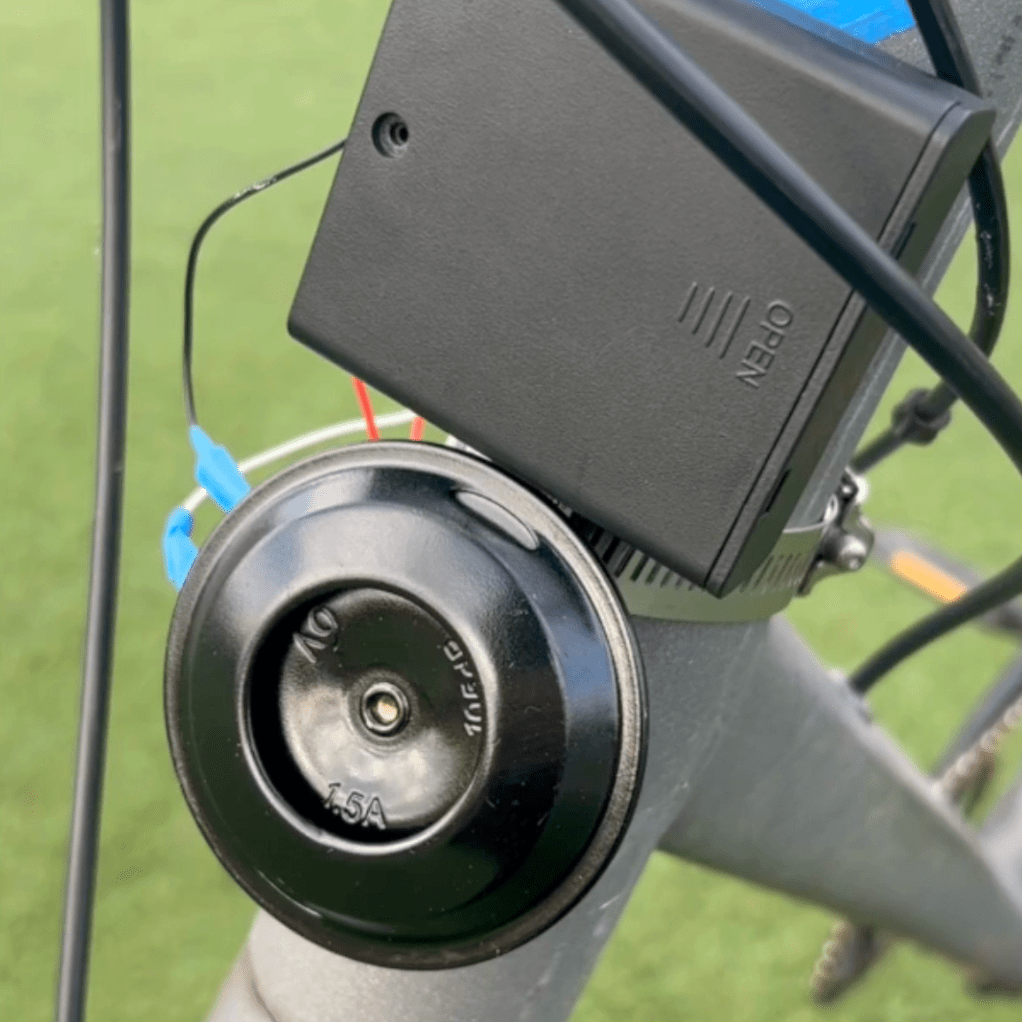
I designed and built Street Squeak, a compact 105 dB bicycle horn made to help cyclists stand out in busy urban traffic. The goal was to create something as attention-grabbing as a car horn – but small, weatherproof, and affordable enough for any cyclist to use. The entire system costs under $15 in materials and runs on AA batteries, with a handlebar-mounted momentary contact switch for quick, one-handed activation.
Design Process
The project started from a simple frustration: traditional bike bells are too quiet to get a driver’s attention. I began sketching out ways to bring car-level sound to a bicycle while keeping it compact, affordable, and easy to operate. Early sketches explored options like squeeze horns and small buzzers, but they lacked power and felt toy-like. Eventually, I decided to repurpose a real 6V car horn, powered by AA batteries, to give cyclists a truly assertive sound.

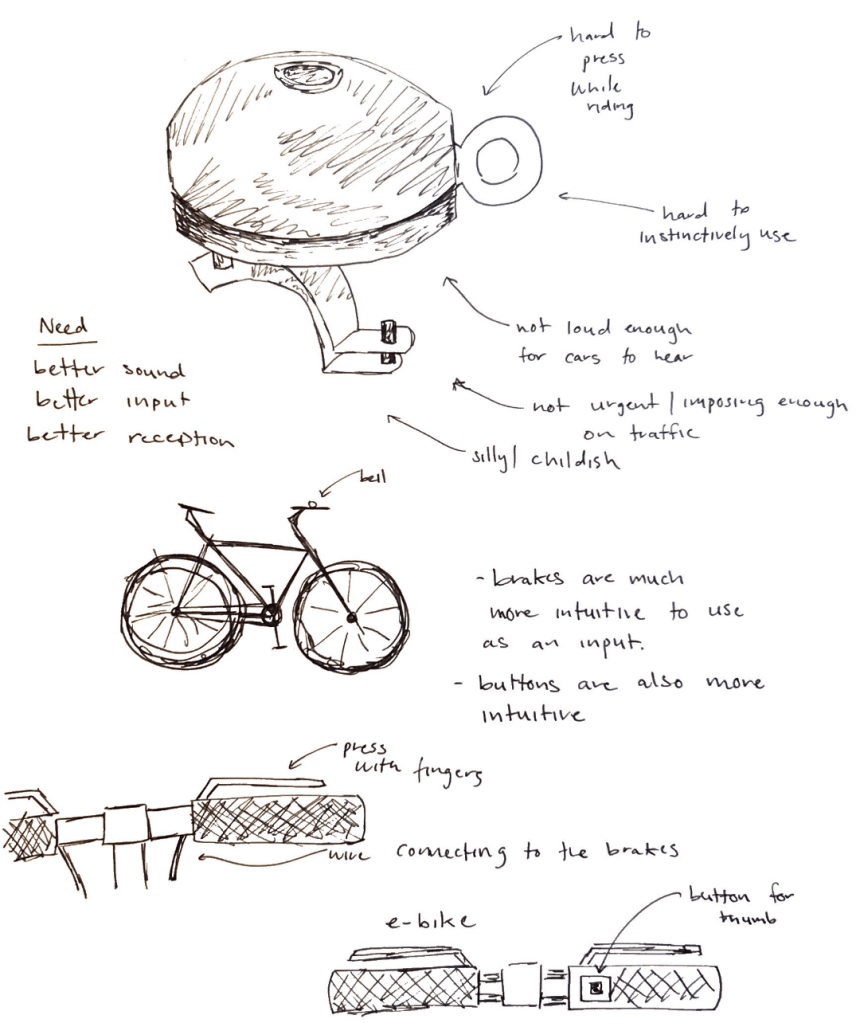
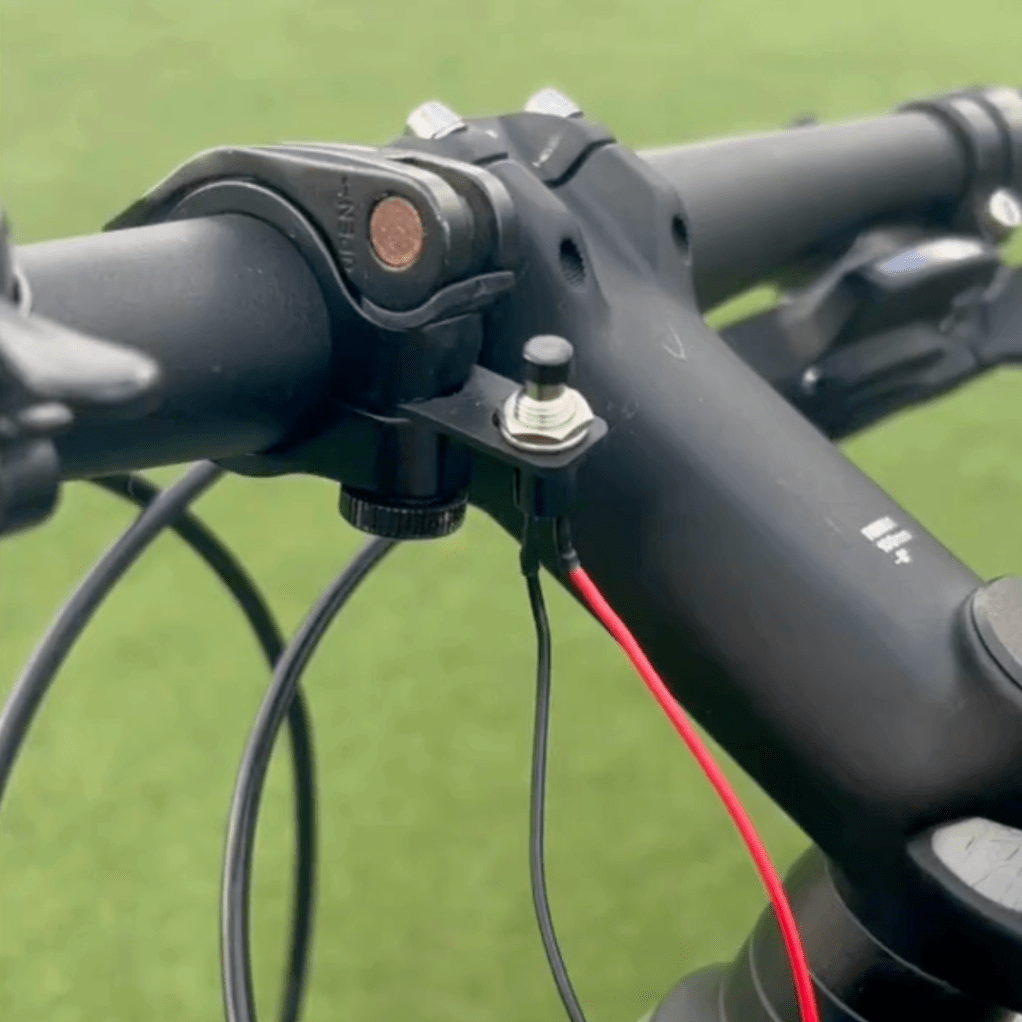
I mapped out a clean, minimal wiring system connecting the horn to a small battery pack and a handlebar-mounted thumb button. The button could be pressed instinctively while riding, similar to operating a bike brake, a big improvement over traditional bells that require the rider to move their hand awkwardly mid-ride. The system attaches securely to the bike frame with a simple metal bracket and screws, keeping it stable even on rough roads.

Every decision, from the mounting location to the button design, was about responsiveness and reliability. By the end, the prototype produced over 100 dB of sound in a lightweight, low-cost setup. The result wasn’t just louder; it made communication between cyclists and drivers feel immediate and confident.
Build and Testing
After refining the sketches, I sourced a 6V car horn, the same type used in compact vehicles, and connected it to a custom AA battery pack mounted under the bike frame. The entire circuit was simple: power from the batteries flowed through a momentary thumb switch on the handlebar, triggering the horn instantly when pressed. I used flexible wire sheathing to route connections cleanly along the frame and made sure the assembly could withstand vibration and rain.
On the road, the system performed beyond expectations. During testing in real traffic, the sound cut cleanly through ambient noise and immediately drew driver attention, even in noisy intersections. The tactile feel of the thumb button made activation instinctive and satisfying, and the sound delivered a sharp, confident tone that felt appropriate for
busy city riding.
Through these tests, I found the design struck the right balance between power and simplicity. It is rugged, repairable, and effective.
Reflection
This project started as a quick sketch about a small frustration, a bike bell that no one could hear, and evolved into a full prototype that reimagined what a bicycle horn could be. Working through each iteration, from paper drawings to wiring and testing, taught me how much hands-on experimentation shapes design intuition.
Translating a car horn into a lightweight, bike-friendly form meant thinking through ergonomics, power, and sound direction all at once. Seeing the final version mounted and working on my bike everyday made all the prototyping worth it. It was built from simple parts, but it carries the satisfaction of something truly functional.

 Vivek Patel